Keynotes
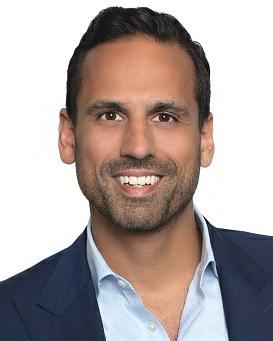
Amir Rozwadowski
Sr. Vice President & Chief Financial Officer, AT&T Business
Amir Rozwadowski is senior vice president and chief financial officer of AT&T Business, where he leads the finance organization for one of the world’s largest B2B communications businesses. His perspective is shaped by experience as a Fortune 100 operator, venture investor, board director, and top-ranked Wall Street analyst. Amir is passionate about helping organizations navigate transformation, accelerate growth, and create long-term value. A cancer survivor and endurance athlete, he is dedicated to supporting veterans, advancing cancer research, and expanding educational opportunity through philanthropy and community service.
Presenting:
Ben Meck
Director, Data Platform, Adobe
Ben Meck is a Director of Data Platforms at Adobe, working at the intersection of data platform engineering, agentic artificial intelligence (AI) strategy and go to market. He leads an "Adobe on Adobe" initiative, helping launch the world's largest Adobe Experience Platform implementation — powering personalized, real-time experiences across 200+ surfaces for products like Photoshop, Acrobat and Express. His role also helps shape how Adobe builds, governs and scales features and AI agents across AEP, Adobe Journey Optimizer and Customer Journey Analytics.
Ben previously led digital analytics teams at Aetna and CVS Health before moving into a technologist role building enterprise martech and data platforms.
Presenting:
Chase Abraham
Senior Director of Creative Excellence, The Coca-Cola Company
Chase is Senior Director of Creative Excellence at The Coca-Cola Company, where he shapes the creative strategy and vision behind some of the world's most recognized campaigns. His work spans cultural collaborations, product launches and brand storytelling — including Share a Coke, Coca-Cola’s Global Partnerships with Marvel and Star Wars, Coke Studio and many more.
Presenting:
Chris Lisciandro
Vice President and Executive Creative Director - Corporate Alliances & Partnership Marketing, The Walt Disney Company
Chris Lisciandro is Vice President and Executive Creative Director - Corporate Alliances & Partnership Marketing, at The Walt Disney Company, leading 360° collaborations between Disney franchises and global brands including Coca-Cola, Visa, McDonald’s, GM and M&M’S across Marvel, Star Wars, Pixar, Disney Animation, Disneyland and Walt Disney World.
Chris has helped create Cannes Lions and Clio Entertainment award-winning campaigns including “Marvel Teaser or Tide Ad?” and “Loki Charms,” with recent projects including the Coca-Cola x Star Wars and M&M’S x Marvel global brand collaborations.
Presenting:
Eric Siegel
Chief Executive Officer, Gooder AI and Former Professor, Columbia University
Eric Siegel, Ph.D., is a former Columbia University professor who helps companies deploy machine learning. He is the co-founder and chief executive officer of Gooder AI, the founder of the long-running Machine Learning Week conference series, the instructor of the acclaimed online course “Machine Learning Leadership and Practice – End-to-End Mastery,” executive editor of The Machine Learning Times and a frequent keynote speaker. He wrote the bestselling book, “Predictive Analytics: The Power to Predict Who Will Click, Buy, Lie, or Die,” which has been used in courses at hundreds of universities, as well as “The AI Playbook: Mastering the Rare Art of Machine Learning Deployment.” Eric’s interdisciplinary work promotes a stronger, more collaborative partnership between technology and business. At Columbia, he won the Distinguished Faculty award when teaching the graduate computer science courses in machine learning and artificial intelligence. Later, he served as a business school professor at University of Virginia Darden.
Presenting:
Josh Nations
Global Vice President of Strategic Partnerships, The Coca-Cola Company
Josh Nations is the Global Vice President of Strategic Partnerships at The Coca-Cola Company, where he works at the intersection of some of the world’s most exciting industries — cinema, gaming, amusement and cruise. He leads the strategy behind many of Coca-Cola’s biggest global partnerships, collaborating with an incredible team and partners across the Coca-Cola system to create experiences that connect brands with consumers in meaningful — and often fun — ways.
Josh brings more than 28 years with Coca-Cola, with experience spanning sales, marketing and media. Over that time, he’s built a reputation for turning partnerships into powerful platforms for growth and storytelling.
Presenting:
Marc Wilson
Chief Executive Ambassador & Co-Founder, Appian
Marc Wilson is a co-founder of Appian and currently serves as chief executive ambassador, overseeing the company's executive engagement initiatives. He is a leading expert in the real-world application of artificial intelligence (AI), Robotic Process Automation (RPA) and Business Process Management (BPM). Marc holds a bachelor of arts degree with honors in government international relations) from Dartmouth College. Outside the office, he enjoys running, exploring national parks and rooting for the Capitals, Braves and Falcons.
Presenting:
Matt Parker
Australian Mathematician, New York Times Bestselling Author & Award-Winning Stand-Up Comedian
Matt Parker is a mathematician, award-winning comedian, Youtuber with more than 100 million views and a New York Times best-selling author of Humble Pi and Love Triangle. Through his hit channel, Stand-Up Maths, and work with various media platforms, Parker blends expert insight with sharp humor, delivering engaging content and talks on math, technology and AI, proving numbers can be just as entertaining as they are profound.
Presenting:
Prabhath Nanisetty
Global Tech/AI Industry Lead, Snowflake
Prabhath Nanisetty is the global industry leader for technology at Snowflake. He advises companies across the software, artificial intelligence (AI) and tech ecosystem on accelerating product roadmaps, redefining enterprise software in the age of AI and innovating on the most challenging customer problems. His background as the former chief innovation product officer at Numerator, as a former AI and analytics leader at Procter & Gamble (P&G) and being a long-time Snowflake customer provides him a unique perspective on solving modern challenges in this industry.
Presenting:
Rachel Hanessian
Group Product Manager, Customer Experience Orchestration, Adobe
Rachel Hanessian is a product leader at Adobe, where she leads CX Enterprise Coworker, Adobe's enterprise artificial intelligence (AI) solution for customer engagement. She drives the development of AI-first products that help organizations design and deliver personalized customer experiences at scale.
Presenting: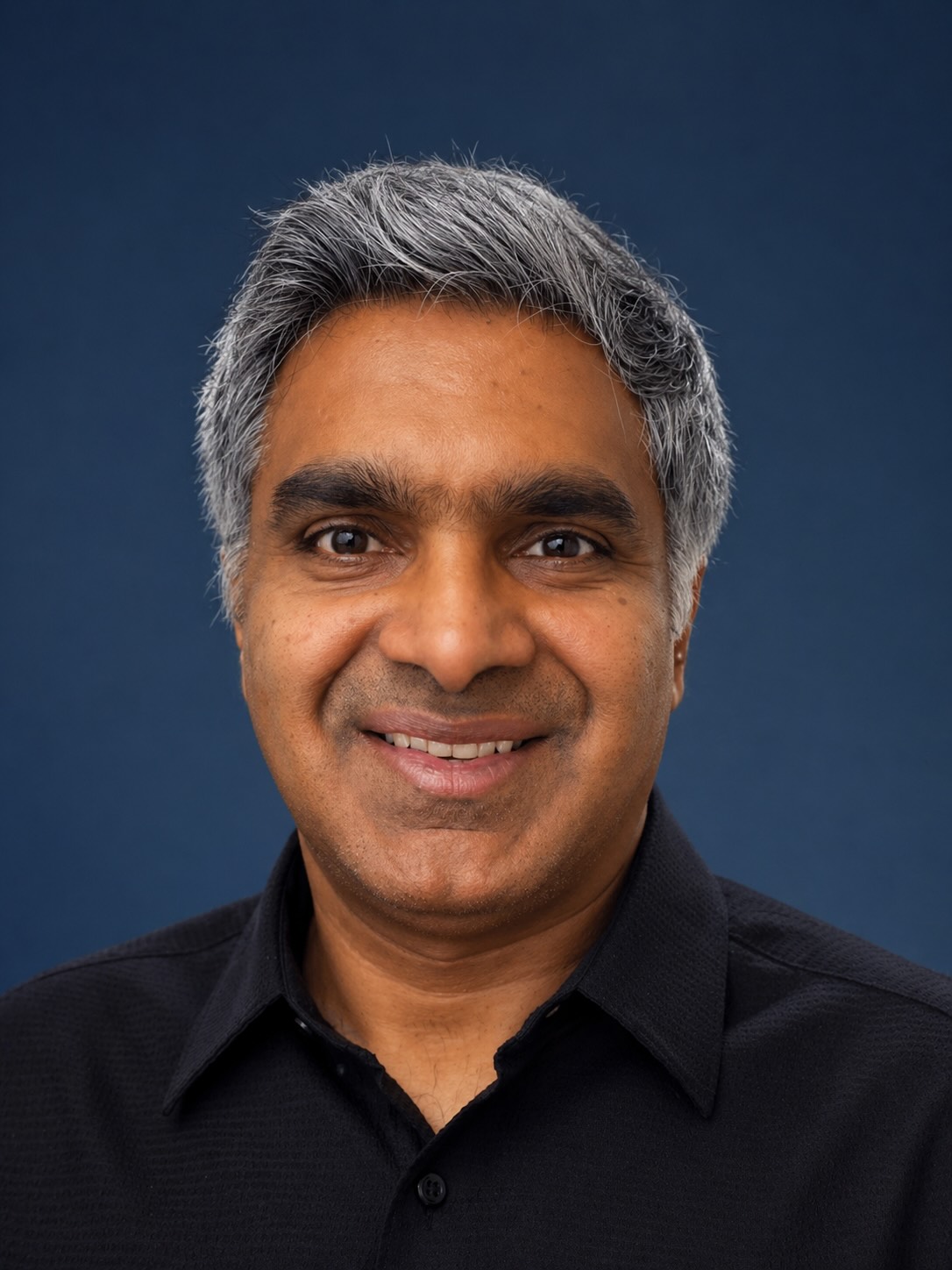
Sundeep Parsa
Vice President, Adobe Experience Platform and Customer Engagement
Sundeep leads product strategy for Adobe Experience Platform, Real-Time Customer Data Platform and the Customer Journey products within Adobe's Digital Experience organization. Since joining Adobe in 2017, he has grown his portfolio from Adobe Campaign to include Adobe Target, Adobe Journey Optimizer, Marketo, AEP, Real-Time CDP and Adobe Audience Manager, driving Adobe Journey Optimizer's growth into a patent generating product. His organization now leads the platform strategy behind Adobe's artificial intelligence (AI)-driven customer engagement, building the data and orchestration foundation powering AI across the CX portfolio. He previously spent seven years at Oracle as VP of Product Management for Oracle Responsys.
Presenting:
Tim Finley
Sr. Vice President of AI, Couchbase
Tim Finley is senior vice president of AI at Couchbase, leading AI product strategy and internal transformation. He previously spent over five years at Amazon Web Services (AWS), managing global business strategy for their data and AI services portfolio. His extensive background also includes senior roles at Oracle and leadership positions in global manufacturing technology. Based in Waterford, Virginia, Finley lives with his wife and has three grown children. His work continues to position Couchbase as a premier operational data platform for agentic AI.
Presenting:Featured Speakers

Alexander Volfovsky
Associate Professor, Departments of Statistical Science & Computer Science, Duke University
Alexander Volfovsky is an associate professor in the departments of statistical science and computer science at Duke University. He serves as director of graduate studies in statistical science and is the director of the causality at Duke Research Initiative.
His research develops theory and methods for causal inference and experimental design in complex systems. He studies settings involving social networks, text and AI, where researchers may not know in advance which measurements matter, how individuals or units influence one another or how limited experimental resources should be allocated. His work examines how experiments can learn this structure as they unfold while preserving credible causal conclusions. More broadly, he is interested in using principled statistical reasoning to improve scientific decision-making and support the development of AI systems that are reliable, trustworthy and effective.
Before joining Duke, Volfovsky was a National Science Foundation Mathematical Sciences Postdoctoral Fellow at Harvard University. He earned his Ph.D. in statistics from the University of Washington and his bachelor’s degree in mathematics and master’s degree in statistics from the University of Chicago.
Presenting:
Angela Alexander
Sr. Data Strategist, The Walt Disney Company
Angela Alexander is a lead of data strategy for Disney Advertising, specializing in data-driven and technology-led solutions to support the evolving advertising landscape. Over her 10+ year career at The Walt Disney Company, she has developed expertise at the intersection of analytics, audience strategy and engineering. Her work has included driving social media strategy for Disney Studios, designing audience engagement strategies for Parks and Resorts, and developing backend technologies for Parks Data Platforms. Her participation in CODE:ROSIE, Disney’s engineering development program, has shaped her technical growth and leadership path. Angela holds degrees in cognitive and linguistic sciences and data science.
Presenting:
Ben Thompson
Data Engineering Leader, Cursor
Ben Thompson leads data engineering at Cursor with over a decade of experience in data science, analytics engineering and data platform work. He specializes in building reliable data models and pipelines, warehouse performance, data quality and analytics tooling, and previously led analytics platform engineering as Senior Staff Data Engineer at Faire. Ben holds a Ph.D. in Astrophysics from Texas Christian University and a bachelor of art degree in Astrophysics from Ohio Wesleyan University.
Presenting:
Beth Albright
Visual Effects Supervisor, Pixar Animation Studios
Beth Albright has worked in animation since Space Jam (1996). She joined Pixar Animation Studios in 2009 as a character shading and groom artist, contributing to Toy Story 3 (2010), Brave (2012), Monsters University (2013), Finding Dory (2016), Coco (2017) and Incredibles 2 (2018). She became Pixar’s first female character supervisor on Luca (2021) and most recently served as the visual effects supervisor for Hoppers (2026). Albright blends technical expertise with artistic sensibility, leading cross-disciplinary teams to realize a director’s vision. She holds a bachelor of fine arts degree from the University of Notre Dame and a master of fine arts from The Ohio State University, and lives in Oakland, California.
Presenting:
Bianca Pryor
Director, Data Science for Media & Entertainment, NVIDIA
With 20 years of expertise across academic research, market insights and executive leadership, Bianca Pryor sits at the intersection of data, media & entertainment, and artificial intelligence/machine learning at NVIDIA. Their diverse career journey includes mastering advanced market research analytics at Kantar TNS, scaling businesses and coaching cross-coastal teams as an executive at System1 and spending five years brand-side at BET Media Group championing insights and Black culture. Bianca is passionate about blending deep analytics with cultural and media insights to drive impactful business strategies.
Presenting:
Bill Rand
Goodnight Executive Director, Institute for Advanced Analytics, North Carolina State University
Bill Rand is the Goodnight executive director of the Institute for Advanced Analytics at North Carolina State University, the oldest and boldest data science program in the world. A leading expert in artificial intelligence (AI), computer science and marketing analytics, Bill researches the fusion of machine learning, large language models (LLMs) and agent-based modeling to solve complex human and business problems. Discover more about this pioneering applied AI and data education program at analytics.ncsu.edu.
Presenting:
Bj Price
Manager, Business Intelligence & Reporting, The Walt Disney Company
Bj Price leads Business Intelligence and Reporting for Disney Experiences Intelligence. Her 29-year career at Disney has included roles in entertainment, operations, engineering, finance, training and analytics. She is passionate about data visualization, analytical storytelling and responsible AI use. She studies AI-generated charts, dashboards and visual curiosities to better understand the line between insight and nonsense.
Presenting:
Brandon Ramsey
Director of Engineering, ESPN
Brandon Ramsey is director of engineering at ESPN, where he leads the Personalization & Recommendations organization responsible for powering personalized experiences across ESPN’s digital products. His teams build large-scale machine learning (ML) systems spanning content retrieval, ranking, recommendation engines, experimentation platforms, user understanding and real-time personalization for millions of sports fans.
Prior to ESPN, Brandon was vice president of personalization and social product development at Fox Sports, following Fox’s acquisition of Fanhood, a sports-focused social platform he founded and led as chief executive officer (CEO). Earlier in his career, he founded and co-founded multiple technology startups and held engineering leadership roles at Yahoo!, where he led teams across travel, shopping and commerce platforms.
Over the course of his career, Brandon has focused on building products and platforms at the intersection of artificial intelligence (AI), personalization, consumer experiences and large-scale distributed systems. He holds a bachelor's degree in computer science and engineering from Auburn University.
Presenting: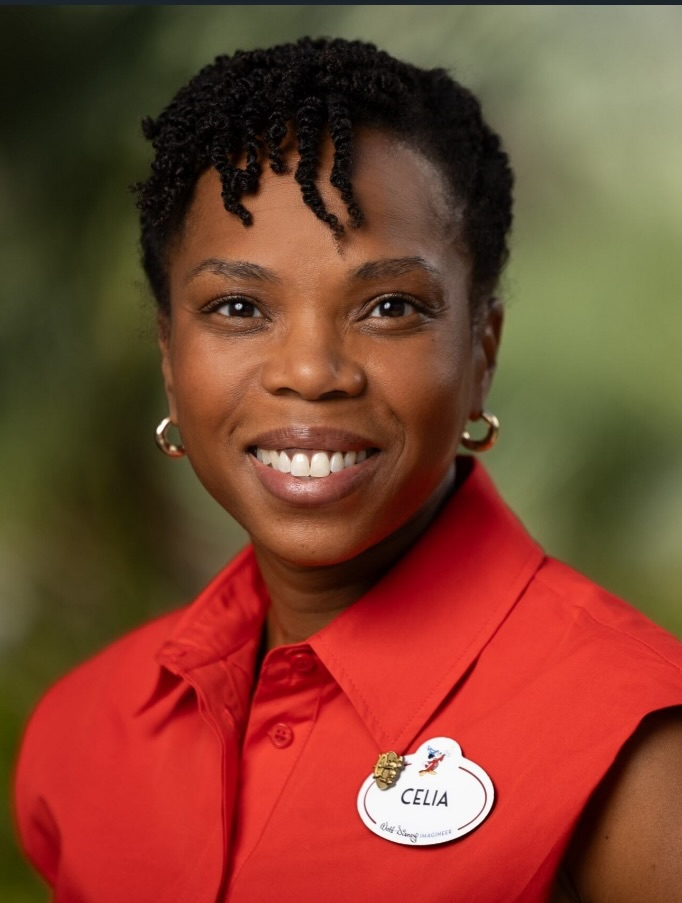
Celia Gomez
Sr. Research Scientist, Disney Research, Walt Disney Imagineering
As the daughter of educators, Celia was taught to never stop learning; she holds tight to that value even today. Before joining Disney, Celia earned her doctorate in human development and education, and she worked in education research for over ten years. Today, she uses this background in interdisciplinary social science in her role as senior research scientist at Walt Disney Imagineering. She applies both quantitative and qualitative data analytics to drive technological innovation. She is particularly interested in understanding how people — Disney cast members and guests alike — interact with the technology and environments in Disney Experiences’ parks, properties and products.
Presenting:
Chad Cooper
Sr. Manager, Digital Analytics, The Walt Disney Company
Chad returns for his fourth Disney Data & Analytics Conference (DDAC) speaking appearance to tackle a critical challenge in data analytics: creating trust. As a leader at Disney with 15 years of experience, Chad leads a team of digital analysts supporting the Disney Signature Experiences portfolio of businesses. Known for his past DDAC sessions on data storytelling, curiosity and the impact of time, Chad's presentations blend academic rigor, real-world experience and a dash of nonsense to keep things interesting. He holds a doctorate in business administration from Rollins College, a master of business administration from Stetson University and a bachelor’s degree from the University of Tennessee.
Presenting:
Chris Szydlo
Content Director, Disney Institute
Chris Szydlo’s team designs learning experiences about Disney’s approach to leadership, quality service, employee engagement and creativity in business, all with the goal of upskilling business professionals and organizations. With over 30 years of Disney experience in strategic and creative roles, Chris leverages his vast Disney network to transform business and leadership insights into powerful content that consistently receives extremely high positive participant ratings. Prior to Disney, he was a master model builder and general manager of the LEGO Imagination Center. Chris has a bachelor’s degree, specializing in education, from Rensselaer.
Presenting:
David Dichmann
Vice President, Product Marketing, Cloudera, Inc.
David leads the product innovation team at Cloudera for Databases and Data Warehouses, with a focus on modern data architectures such as Data Mesh, Fabric and Lakehouses. David has over 30 years of experience in data management, data ecosystems, information architecture and enterprise architecture. David has a passion for helping businesses and people make data into transformative insights that lead to product and market acceleration and disruption. Before joining Cloudera, David worked for companies like Sybase, SAP and Hewlett Packard Enterprise.
Presenting:
Emily Kubicek
Manager, Data Science, The Walt Disney Company
Emily Kubicek leads data science strategy within the Data & Measurement Sciences organization, overseeing multiple teams focused on advancing the Disney Compass platform. Before her seven years at The Walt Disney Company, Emily earned her Ph.D. in cognitive neuroscience from Gallaudet University where she studied the behavioral and neural correlates of diverse audiences. Emily brings her previous lab leadership skills and creative scientific approaches to deliver unparalleled service and technical innovation to Disney Advertising’s internal and external stakeholders.
Presenting: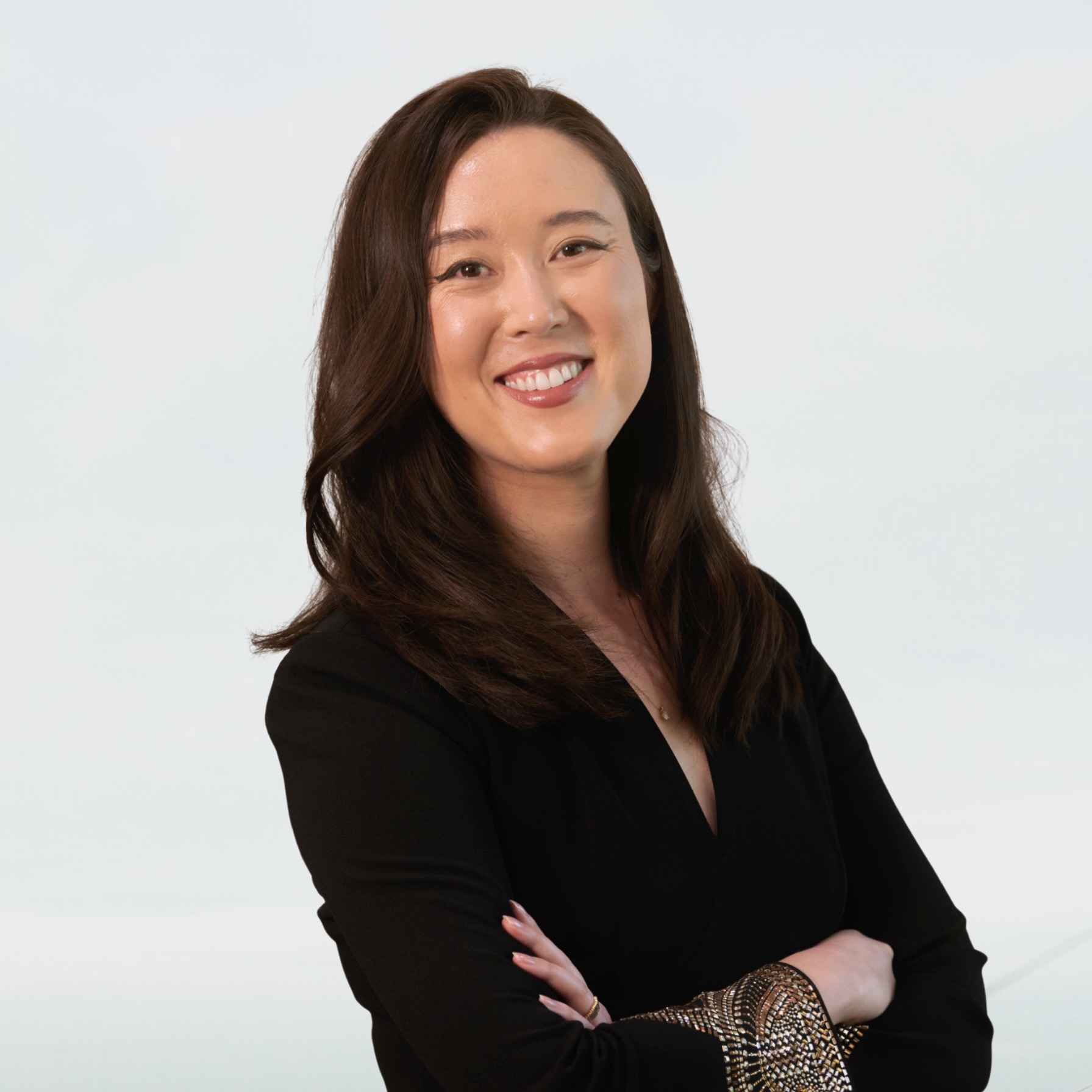
Jaclyn Mathai
Sr. Manager, Data Science, Data, Measurement & Advanced Analytics, Disney Entertainment
Jaclyn Mathai is a senior manager of data science at The Walt Disney Company, where she leads teams building AI-driven products at the intersection of analytics, storytelling and human-centered design. A University of California Berkeley cognitive science alumni and Poets & Quants 2026 Best & Brightest, Jaclyn has spent a decade turning complex data into tools people love to use — from machine learning forecasting platforms to a generative AI content intelligence application. She is a martial arts gold medalist, farmer’s daughter, avid painter and passionate advocate for making STEM more creative and accessible.
Presenting:
Jacob Benoit
Sr. Manager, Software Engineering, The Walt Disney Company
Jacob Benoit is a senior manager of software engineering at Disney Experiences Technology, where he leads guest-facing search and answer technology across Parks websites and mobile apps. With more than 20 years of experience in technology leadership, Jacob brings a practitioner’s perspective to the challenges of building and evaluating AI-driven systems at scale. His current work sits at the intersection of large language models, retrieval-augmented generation and the high standards of quality and brand trust that define the Disney guest experience.
Presenting:
Jeff Camm
Professor & Inmar Presidential Chair in Analytics, Wake Forest University School of Business
Jeff Camm is a professor and the Inmar presidential chair in analytics in the Wake Forest University School of Business. A firm believer in practicing what he preaches, he has consulted for numerous corporations and government agencies. Known for his pragmatic views on optimization and decision intelligence, he has spoken at conferences, universities and industry events, including presentations at Procter & Gamble, Kroger, Duke Energy, GE and Amazon.
Presenting:
John Lopus
Applied Artificial Intelligence Architect, Anthropic
John Lopus is an applied artificial intelligence architect on the strategic accounts team at Anthropic, where he works with a handful of the company's largest and most strategic enterprise customers. He helps their engineering and data organizations take agentic systems from first pilot to governed production at scale. His current work centers on managed agents and the operating patterns enterprises need to run them safely. Before Anthropic, John spent more than a decade leading solutions engineering teams across the enterprise data and marketing technology space.
Presenting:
Julie Holt Bentham
Sr. Manager, Data & Insights, Disney Publishing
Julie Holt Bentham loves to blend the magic of storytelling with the magic of data. Currently, she is the Senior Manager of Data and Insights for Disney Publishing, combining her two favorite things in the world: data and books. Her love for data started in the nonprofit space where she studied nonprofit management with a focus on donor analytics during her collegiate career. After graduating with her undergraduate degree, Julie had the privilege of working in several data focused roles across Disney including audience insights and customer engagement analytics. She also has her master of business administration from Crummer Graduate School of Business at Rollins College.
Presenting:
Katerina Iliakopoulou-Zanos
Principal Machine Learning Engineer, ESPN
Katerina Iliakopoulou-Zanos is a principal machine learning (ML) engineer at ESPN, leading recommendation systems for the ESPN app. She has built and deployed recommender and personalization systems across large-scale consumer products, with a focus on practical experimentation, scalable ranking and responsible optimization. Previously, she worked on recommender systems at Meta and The New York Times. Her work sits at the intersection of machine learning, product strategy and the real-world constraints of shipping systems that millions of people use every day. She holds a bachelor's degree in electrical and computer engineering from the Aristotle University of Thessaloniki and a dual master's degree in computer science and journalism from Columbia University.
Presenting:
Kristen Swerzenski
Conservation and Science Technician, Sea Turtles, The Walt Disney Company
As a conservation and science technician with Disney’s Animals, Science and Environment, Kristen leverages her background in biology and data science to drive conservation efforts across Disney Experiences. Her work bridges field research, data strategy and storytelling, from protecting sea turtle populations at Disney’s Vero Beach Resort to creating data systems that improve conservation practices. Passionate about translating science into impact, Kristen ensures data drives conservation strategies that support Disney’s mission to protect wildlife and wild places.
Presenting:
Kyle Lindsey
Executive AI Innovation Advisor, World Wide Technology
Kyle Lindsey is an executive Artificial Intelligence (AI) innovation advisor at World Wide Technology (WWT), focused on media, entertainment, gaming and sports. He works at the intersection of spatial intelligence, digital twins, computer vision and the NVIDIA ecosystem, helping clients move ideas from concept to pilot to production. Kyle led WWT's Energizer Park digital twin work and has spoken at DDAC, Unreal Fest and SIGGRAPH on digital twins, digital humans and experiential AI.
Presenting:
Lee Van Ginkel
Vice President of Engineering and Field Chief Technology Officer, Presidio
Lee Van Ginkel is vice president of engineering and field chief technology officer at Presidio, where he helps organizations navigate the rapidly evolving world of artificial intelligence (AI). His work focuses on agentic AI, multi-agent systems, digital twins and the architectures required to make AI useful in complex enterprise environments. He has spent more than 16 years working with some of the world’s largest organizations to turn emerging technologies into practical solutions. Lee loves looking outside of the technology industry to find creative ways to solve complicated problems. He draws inspiration from how other industries organize information, make decisions and coordinate people with specialized roles. That curiosity shapes his approach to AI today as he explores new ways for intelligent systems to collaborate, share context and solve problems together.
Presenting:
Max Benton
Manager, Decision Science Products, The Walt Disney Company
Max Benton has spent nearly a decade at Disney leading teams that build artificial intelligence, machine learning and analytics products used to drive decision-making across The Walt Disney Company, from streaming to global theme parks and experiences. Before Disney, he developed Australian basketball analytics and consulted for Fortune 100 companies. Max is a data visualization upskilling instructor for the Disney Data & Analytics Academy. He holds a bachelor's degree from the University of Central Florida and a Master of Science in Quantitative Management from Duke University.
Presenting:
Michelle McGuire
Principal, Chief Data & AI Officer, Olympic and Paralympic Partnership, Deloitte
Michelle is responsible for the strategy and development of artificial intelligence (AI) & Data solutions across the Olympic and Paralympic Movement – helping transform the games with a goal of making them more scalable and accessible for fans, volunteers, employees, media rights holders and sponsors. Michelle partners with sponsors to drive value by convening the ecosystem through data collaboration and the development of integrated solutions. She also works with National Organizing Committees (NOCs), International Federations of Sport (IFs) and future Organizing Committees (OCOGs) to leverage AI to transform the future of sports and the next generation of athlete performance, revenue generation and fan engagement.
Presenting:
Paul Parkinson
Architect & Developer Advocate, Oracle Database
Paul Parkinson is an architect and eeveloper advocate at Oracle Artificial Intelligence (AI) Database, where he has worked for the last 25 years. His focus is on agentic AI, multicloud, transaction processing, observability, cloud-native architecture, security, spatial and polyglot data models. Paul is a frequent speaker, blogger, workshop author and builder of interactive activations. He holds 25 patents.
Presenting:
Peter Manta
Community of Practice Director, Informatica
Peter Manta is an artificial intelligence (AI) and data strategy leader with 25+ years in data management, analytics and technology. As AI Practice Director at Informatica from Salesforce, he bridges data architecture and AI deployment to help organizations build foundations for trustworthy, decision-grade AI. With a master's in applied mathematics from Cornell, Peter brings quantitative rigor to the practical challenges of AI adoption. His current work challenges conventional data quality frameworks, arguing that in agentic systems the only measure that matters is impact on decision quality, and he is developing the quantitative methods to prove it.
Presenting:
Rachel Chung
Associate Teaching Professor, Heinz College of Information Systems & Public Policy, Carnegie Mellon University
Rachel Chung, Associate Teaching Professor, Heinz College of Information Systems & Public Policy, Carnegie Mellon University, is an expert in teaching and explaining AI. Chung has mastered her craft by publishing AI the Magic Box to explain how neural networks work to middle schoolers, the college-level textbook AI for Business, and giving a TEDx Talk based on her children's book. Chung's research explores the intersections of digital institutions, occupational fraud and AI. Chung holds dual Ph.D. degrees in Management Information Systems and Psychology from the University of Pittsburgh and has received numerous honors including an IBM Faculty Award and four teaching awards from William & Mary.
Presenting:
Rebecca Godsil
Sr. Facilitator, Disney Institute
Rebecca Godsil facilitates professional development courses as well as keynotes and workshops at Walt Disney World® Resort and Disneyland® Resort. With over two decades of Disney experience across operations, sales and human resources, she brings a strong passion for employee engagement and recognition. Rebecca previously led enterprise‑wide programs, like The Walt Disney Legacy Award and Cast Service Celebrations, and served as a Walt Disney World Resort Ambassador. She holds a bachelor’s degree in organizational communications and business administration from Pepperdine University.
Presenting:
Rebekah Lindborg
Conservation Programs Manager, The Walt Disney Company
As a conservation programs manager with Disney’s Animals, Science and Environment, Rebekah is dedicated to finding innovative solutions to advance coral reef restoration in The Bahamas. Her commitment has centered on deploying emerging technologies to optimize data collection, ensuring that conservation decisions are grounded in robust, actionable insights. By integrating analytics and real-time data strategies into her environmental work, Rebekah aims to bridge the gap between technology and environmental preservation efforts for the betterment of our ecosystems.
Presenting:
Rick Houlihan
Principal Technologist, Oracle Data AI & Platform
Rick Houlihan is Field CTO at Oracle and an influential data architect of the NoSQL era. At Amazon, he invented DynamoDB Single-Table Design and led the largest relational-to-NoSQL migration in history — 3,000 RDBMS instances, 75 petabytes, zero Tier-1 issues — training 25,000 developers along the way. His AWS re:Invent sessions are some of the most-watched database talks in the conference's history. After building MongoDB's successful developer enablement program, he joined Oracle, where he has helped define Unified Model Theory, the framework unifying relational and document models. His thirty-year career spans enterprise data architecture from mainframe to cloud-native solutions. Rick has shipped production data architectures at enterprise scale on DynamoDB, MongoDB, and Oracle — and authored 9 patents in diverse areas including ML/CEP, cloud virtualization, microprocessor design, and NoSQL.
Presenting:
Shayde Christian
Chief Data & Analytics Officer, Cloudera
Shayde Christian is the Chief Data and Analytics Officer at Cloudera where he leads data-driven cultural transformation to help organizations realize maximum value from data and artificial intelligence. Shayde works with customers to optimize their Cloudera investments and build high-value use cases that deliver measurable business impact. Before joining Cloudera, Shayde served as Head of Data and Analytics for a Fortune 200 Healthcare company. Prior, he was a principal consultant advising Fortune 500 companies on data strategy and enterprise information management.
Presenting:
Tae Hong Min
Manager, Machine Learning Engineering, The Walt Disney Company
Tae Hong Min is an artificial intelligence (AI)/machine learning (ML) engineering manager at Disney Experiences Technology, where he leads AI/ML operations for the Disney Experiences Technology AI Center of Excellence (COE) covering AI evaluations, hallucination detection, accuracy, guardrails, AI safety and large language model red teaming. Tae works closely with product and core engineering teams and cross-functionally with corporate security, quality assurance, performance engineering, infrastructure and application stakeholders across the platform. His work sits at the intersection of engineering rigor and responsible AI delivery.
Presenting:
Tara Steuber
Sr. Manager, Decision Science, The Walt Disney Company
Tara Steuber is a strategic leader with 14 years at The Walt Disney Company, leading the development and evolution of human- and AI-driven decision products. With a foundation in mathematics and software engineering, she has led the design, delivery and sustainment of innovative decision support tools for global clients across the enterprise. She focuses on advancing engineering maturity for data scientists by translating complex business needs into robust, production-grade solutions that balance rapid delivery with quality, governance and risk mitigation. She has a special interest in shaping AI strategies that help science developers increase productivity and deliver higher-quality products.
Presenting:
Vasudha Khare
Sr. Product Manager, Confluent
Vasudha Khare is a product manager at Confluent, where she’s building the Real-Time Context Engine — infrastructure that lets Artificial Intelligence (AI) agents query fresh data directly from live streams at low latency. Before Confluent, she spent nearly a decade building AI and Machine Learning products at Microsoft, Intuit and Vanguard, including real-time systems for analyzing live customer conversations. She holds an MBA from Kellogg School of Management and has spoken about AI at conferences like Current London, Microsoft Ready and the Women in AI Summit.
Presenting:Presentations

Generative AI has captured the spotlight with its promise to personalize content, automate tasks and transform workflows. But as organizations move from pilot projects to production, many encounter a roadblock: large language models often lack the reliability needed for a full-scale launch
Join Gooder AI, Chief Executive Officer and former Columbia professor, Eric Siegel as he explores why predictive AI — the long-established discipline of predictive analytics and enterprise machine learning — is becoming the essential reliability layer for generative AI. Learn the fundamental differences between predictive AI and generative AI, why predictive AI continues to thrive despite generative AI’s rapid rise and why most organizations should invest at least as much in predictive AI as they do in generative AI.
Eric will examine the two "wows" of AI: breakthrough technology and realized business value. While many AI projects achieve the first, far fewer achieve the second because most organizations don’t properly answer the question, "How good is AI?" Traditional benchmarks are poor proxies for real-world business impact.
The answer isn't choosing predictive AI or generative AI — it's combining them. Through practical examples of hybrid AI in action, Eric will demonstrate how predictive AI complements generative AI to improve reliability, enable more confident decision-making and help organizations finally realize AI's bold promise of enterprise-scale value.
The evolving consumer requires brands to continuously innovate how they approach partnership marketing and deliver meaningful cultural conversations. Learn how The Walt Disney Company and The Coca-Cola Company’s 70-year relationship continues to accomplish this by harnessing the power of storytelling and fandom. See highlights from recent groundbreaking campaigns that blended iconic storytelling, design and emerging digital experiences to create moments of joy and human connection. Together, the teams leveraged shared insights and capabilities to deliver integrated, global product at scale that demonstrated the power of collaboration and drove measurable outcomes.
Matt Parker is famous for many things including writing terrible Python code. Over ten million people have watched him try to run code on his 500-LED Christmas tree and fail. But sometimes code only needs to run once to change the world. Or at least change math. Matt will discuss his adventures in writing non-professional code and how it inspires his online viewers to rise up to achieve unexpected things.

Behind every seamless digital experience is an invisible blueprint. With a focus on how outcomes can look perfect with the right partner, Amir will discuss how to engage data with purpose, the need for connectivity to enable real-time action and the role of the provider with earned trust to ensure it all works securely and reliably. Drawing on real-world trends and emerging possibilities, including our history working with Disney across their portfolio of needs, attendees will hear about how connected ecosystems and intelligent edge environments redefine how organizations operate and engage. Attendees will leave with practical takeaways on how to turn complexity into opportunity, build more resilient digital foundations and prepare their organizations for what comes next.

Enterprises today are activating across a multitude of channels, generating unprecedented volumes of data, content and customer signals. Join Sundeep Parsa, Vice President of Product, Customer Engagement at Adobe, along with Adobe leaders Ben Meck and Rachel Hanessian, to explore how a new generation of AI agents are helping organizations turn those signals into action. Powered by agentic AI, Adobe CX Enterprise Coworker connects data, content, workflows, and business systems into a single intelligent experience, helping teams move faster from idea to execution. Through live demos and real-world use cases, attendees will see how CX Coworker uncovers opportunities, accelerates decision making and delivers more relevant and personalized guest experiences at every touchpoint — all while maintaining governance, security and human oversight.

Artificial intelligence (AI) is playing an increasingly important role in analytics. Semantic analysis of unstructured data will live alongside and in combination with traditional measures and dimensions. The audience broadens from humans to humans and agents, driving exponentially higher volume and velocity. Agents carry no context of their own, so storing context with analytic data becomes the norm — and a new human job. This makes analytics more human-centered, not less: instead of a person running a dozen reports to reach an answer, the agent runs them and does the post-processing. That raises the load on data infrastructure and the stakes on scalability, data freshness, pattern-recognition and context-creation and architectural complexity. In this talk, we will provide a clear vision for architecting this future.
Artificial intelligence (AI) continues to captivate the market with the promise of cutting-edge features and breakthrough models. But as enterprises chase these latest innovations, many encounter a critical roadblock: adopting the latest features does not deliver measurable ROI if the underlying infrastructure is not optimized to support them.
To deliver real value, organizations must expand their definition of AI modernization. Unlocking AI requires balancing deterministic guardrails with probabilistic models, providing structured process orchestration and anchoring execution in a trusted data foundation.
Join Appian’s Co-Founder and Chief Executive Ambassador, Marc Wilson, and Snowflake’s Global Technology & AI Industry Lead, Prabhath Nanisetty, as they explore how to overcome these hurdles. Discover how marrying data and process closes the operational intelligence gap, giving AI the structure, context and enterprise orchestration needed to execute true business outcomes.

Artificial Intelligence (AI) systems don't fail because models are weak, but because context is wrong.
As agents move into production, teams are hitting a new class of data problems. Context is scattered across databases, event streams, Application Programming Interfaces (APIs) and vector stores. It's stale by the time it reaches the model and expensive to recompute. Most architectures were never built to assemble and serve context at runtime.
This talk introduces context engineering: treating context as a continuously computed product, served with low latency in real time. We'll show why batch and warehouse-centric designs struggle with agent workloads, then build a real-time context pipeline live, using Kafka and Flink to serve AI agents through Model Context Protocol (MCP).
When the world is watching, every moment counts – including how you engage your audience, community and fans. As the Worldwide Technology Integration Partner of the Olympic and Paralympic Games, Deloitte is helping deliver an innovative and technologically advanced experience before, during and after the games. Hear our perspectives, share your vision and leave inspired by how artificial intelligence, data and technology can accelerate momentum, connection and collaboration.

Agentic AI is making autonomous decisions right now, often on unreconciled data, incomplete histories, and with stale context. Most organizations deploying agents lack a framework to evaluate if their data can actually support autonomous decisions. Asking "Is our data clean?" is the wrong approach. Chasing data quality is a vanity metric if it doesn't improve decision making. The real question is whether the data is trustworthy enough for irreversible decisions. This session introduces the Agentic Data Contract, a vendor agnostic diagnostic framework for moving beyond data quality and toward decision quality, the standard that earns agents the right to act autonomously.

Data and analytics platforms give organizations a foundation for insight and action. The next design problem is how agents work across the many systems people already use to do their jobs. This session uses IT operations as the use case: observability, service management and digital twins connected so teams can deploy and improve technology with a closed feedback loop. Complex processes do not map to a single agent. They require specialists, and token cost means work is delegated across models. That raises operating questions familiar for any team: when agents run, how are they invoked and how do they hand off without losing context. We will share how we design useful agents to address those challenges in practice.

Data teams don’t lose their weeks on big greenfield builds. They lose them in the details: alerts that fire at the wrong hour, tables that look fine until someone notices and “quick” fixes that turn into an afternoon of digging. This session is about agents that save you both time and headache. Ben Thompson, Data Engineering Leader at Cursor, will outline workflows where artificial intelligence (AI) takes the first pass on operational pain, like picking up a Slack or Datadog alert, and where choosing the right model keeps work moving without blowing token budgets. Learn how agents and models can handle more of the minutiae, so you can stay strategic.

While public artificial intelligence (AI) dominates headlines, enterprise innovation relies on Private AI to protect data, intellectual property and compliance. Yet, moving to production often stalls due to infrastructure silos.
This panel brings together leaders from Cloudera, Dell Technologies and NVIDIA to showcase how a unified, turn-key solution eliminates these roadblocks. Discover how Cloudera’s data management integrates with Dell’s enterprise-grade infrastructure and NVIDIA’s accelerated computing.
Attendees will learn how this joint architecture provides a secure, rapidly deployable blueprint for Private AI to drastically reduce time-to-market.

Reframe how you think about the data foundation of artificial intelligence (AI) memory. Is your strategy multi-model or converged? What’s the difference and why does it matter? Without memory, AI forgets, cannot personalize and cannot learn. Memory is not just facts or a feature; it holds the context that makes data meaningful. A unified memory core is the data layer where relational, JavaScript Object Notation (JSON), vector, graph, spatial and text share one transaction boundary, optimizer, consistency model, and governance domain. We’ll explore memory types, semantic layers, design patterns, tokenomics and the criticality of row-level security, then build an autonomous multicloud memory substrate, using live lakehouse data, so the memory core can power continual learning.

Security cameras are already deployed across stadiums. The opportunity is transforming that existing sensor network into a real-time operational intelligence platform.
Drawing on World Wide Technology’s (WWT) live digital twin of Energizer Park, built with St. Louis City SC, this session explores how NVIDIA Metropolis vision artificial intelligence (AI) and NVIDIA Omniverse turn existing camera feeds into actionable insights — predicting crowd congestion, optimizing concessions and staffing, improving guest flow and strengthening safety operations using infrastructure already in place.
WWT and NVIDIA will share how a digital twin built for planning and visualization evolved into an operational decision-support platform, and what it takes to make that leap — from data readiness to AI integration and governance.

Coding agents crossed the autonomy line first. Data work is next: structured context, checkable outputs and a backlog of repetitive investigation standing between analysts and the creative work only they can do. This talk draws on field work inside some of the world's largest enterprises and traces what happens after the first agent pilot succeeds, when one agent becomes a thousand and policy replaces watching. We will cover where agents land first in a data organization, why the hard problems (durability, identity, audit, cost, evaluations) sit outside the model, how to promote agents on evidence rather than optimism and why the arc ends at managed agents as infrastructure.

A year ago, the ESPN app's recommendations ran on heuristics. Today, they're powered by learned ranking and embedding-based retrieval, and the product never stopped shipping. This talk is the story of that evolution, grounded in what makes sports uniquely challenging: content that spoils in minutes, user intent that shifts from casual browsing to high-intensity playoff viewing and deeply tribal fandom where optimizing for watch time alone can surface the wrong content. We'll walk through each stage of the stack, the metric traps we encountered and where we used large language models (LLMs) to accelerate iteration without outsourcing judgment. Attendees will leave with a practical framework for building an incremental roadmap, where each stage delivers value on its own.
Explore principles that have shaped the culture of one of the world's most admired companies for over a century. Discover how an intentional culture drives exceptional engagement and performance. Meaningful employee experiences are created by design — not chance. Learn how focusing on talent acquisition, development, care and communication fuels emotional engagement that shifts performance and builds committed, high performing teams. Through compelling stories and powerful insights, you'll see how Disney leaders create environments where people feel valued, motivated, connected and inspired to excel. Leave ready to apply these ideas within your organization to strengthen loyalty, purpose, engagement and productivity.
Presented by Disney Institute.

Every year, people leave the Disney Data & Analytics Conference (DDAC) with a notebook full of ideas, but too many never move beyond the notebook. Not because the ideas weren’t good, but because turning inspiration into execution is difficult.
After nearly a decade of launching projects across Disney, from Disneyland Paris to Disney+ and National Geographic, one unexpected pattern emerged. Successful analytical project pitches and classic Christmas movies share the same storyline! Both need a challenge worth solving, characters worth rooting for, clear stakes and a believable transformation. For technical or analytical work, the tried-and-true holiday story arc helps leaders see the value, understand the path forward and believe the idea can become real.
This session gives attendees a practical framework for building stronger pitches and moving ideas from “great thought” to "green-lit project."
’Tis the season to get green-lit!
Every experiment hides a few expensive decisions: which data are worth collecting, which people or locations affect one another and where limited resources should go. We usually commit to these decisions before the experiment begins, effectively treating them as facts.
Using two vignettes this talk asks what happens when the experiment is allowed to learn the answers to these questions as it runs. In the first, a sequential randomized trial learns which costly baseline measurements are worth collecting for future study participants. In the second, an experiment learns an uncertain network of spillovers while deciding where to allocate treatment. In both cases, posterior sampling — often called Thompson sampling — turns uncertainty into a decision rule: act on one plausible picture of the world, observe what happens, update and repeat.
The broader lesson is simple: we do not need to know in advance what matters most. With the right randomization and design safeguards, an experiment can learn what matters as it unfolds — answering today’s question while improving the design of the next round.
Data never used to be part of your role. But over time, requests became more complex, tools more advanced and before you knew it, you’re the designated “data person” on your team–sound familiar? It’s a shift happening across industries as data quietly expands into every job. This talk explores what it means to grow into data responsibilities you weren’t formally trained for: navigating uncertainty, embracing imperfect learning, building confidence and balancing analytics work with (many) competing priorities. Drawing inspiration from the adaptable nature of conservation fieldwork, join two biologists-turned-“unofficial” data professionals to learn practical, relatable strategies for thriving in the data world by necessity, not design.
Programming remains a core skill for every data scientist. As Artificial Intelligence (AI) coding assistants become more common, how do we use them well - working effectively with cross-functional teams, building production-grade solutions and avoiding “AI slop”? What does production-grade really look like in practice? Drawing on 10+ years of experience as a data scientist, Tara shares practical lessons on designing, coding, integrating and using AI responsibly throughout the journey to production. Attendees will leave with a clearer sense of what strong, production-ready solutions look like and concrete ways to use AI to improve quality, accelerate delivery and strengthen collaboration.
As generative artificial intelligence (AI) shifts from conversational chat to autonomous action, educational and corporate analytics leaders must rethink how they manage and upskill talent. Drawing from experiences at the world's oldest and boldest data analytics program, this session explores a practical four-pillar approach to navigating this transition: Learn AI, Learn with AI, Build AI and Build with AI. By examining these pillars, we discuss how the analytics workforce is shifting from traditional content production to critical system auditing. Attendees will walk away with real-world insights, tips and best practices to help their organizations adapt data team training, optimize human-AI collaboration and successfully navigate the evolving AI landscape.
Throughout history, explorers have ventured into the unknown armed with questionable assumptions, antiquated maps featuring sea monsters and more confidence than evidence.
Today's analysts are charting a similarly exciting frontier with AI.
Join the Society of Curious Analysts as we examine AI-generated charts, dashboards and visualizations — some remarkable and some worthy of the Gallery of Magnificent Nonsense. Through practical examples, we'll explore how AI can accelerate visualization design while learning techniques to evaluate accuracy, avoid common pitfalls and separate genuine insights from confidently presented nonsense.
Leave with guidance for using AI responsibly and the judgment to know which discoveries belong in the exhibit hall and which belong back in the crate.
This workshop demonstrates core elements of the modern Transformer-based Large Language Models (LLMs) by hand using a paper worksheet, a spreadsheet template and a simple example. With each step implemented as a spreadsheet formula in a cell, participants can experience and visually witness how values are computed and how they flow through the network structure. Key concepts include tokens, embeddings, dot product, softmax, attention and transformer. Basic understanding of deep learning (i.e. artificial neural networks) is assumed.

In a world shaped by data and algorithms, the true differentiator is still the human behind the work, because we believe the most powerful insights come not just from the final product, but from the people who ask the right questions, apply judgment and creativity and offer authentic perspectives along the way. This belief has long shaped how we work: the intersection of technology and art is at the core of Disney’s storytelling and innovation, and it is this same balance that makes human-centered analytics so powerful. Featuring voices from Pixar, Walt Disney Imagineering, Disney Entertainment and Disney Publishing, this lighthearted breakout session explores how the human elements add greater meaning, resonance and impact to the analytical insights we create.
Presented by Disney Data & Analytics Women (DDAW).
Shipping a large language model (LLM) feature without systematic evaluation means flying blind. This session introduces a practical framework for evaluating Artificial Intelligence (AI)-generated outputs, covering the three evaluator types that belong in every pipeline: LLM-as-judge for qualitative scale, code evaluators for deterministic checks and human review for calibration. We'll focus on retrieval-augmented generation (RAG) system examples, covering key rubrics including accuracy, relevance, safety and brand fit, as well as the difference between offline regression testing and online production monitoring. Attendees will leave with a repeatable approach to knowing whether their AI is actually working.
Predictions are not decisions. A decision is a choice from a set of alternatives. Managers get paid to make decisions and ultimately make choices based on risk and return. So, the real question is, how can we provide management with a good set of alternatives from which to choose? Decision intelligence does exactly that. Properly implemented, decision intelligence moves us from modeling just the data (data science) and away from providing just “an answer” (decision science) to providing smart choices for managers.
As Disney’s data and analytic capabilities continue to advance, how do we optimally leverage these capabilities to learn more about our audiences? Enter Disney Compass: Disney Advertising’s proprietary data and measurement platform, engineered to unify, enrich and elevate how brands connect with audiences across the entire Disney portfolio. Disney Compass leverages first-party data at scale, seamlessly integrating multiple data sources to support data collaboration, insights and measurement. By combining disparate data, we’re allowing for previously impossible end-to-end audience storytelling. Join us as we dive into use cases across business segments to reveal the value gained from unified data-driven decision-making.
Trust is the invisible foundation of every data-driven decision. Because data doesn’t make decisions, people do. You’re invited to imagine a world of innovative possibilities, beyond your core statistical calculations. A world where you intentionally integrate trust into your work, inspire trust in your team and instill trust in yourself. In this session, we will explore how the best data storytellers create trust to produce potent processes, passionate partners and high-performing people. I trust you will make the right decision and come join the fun.
Theater Sessions
Coding agents crossed the autonomy line first. Data work is next: structured context, checkable outputs and a backlog of repetitive investigation standing between analysts and the creative work only they can do. This talk draws on field work inside some of the world's largest enterprises and traces what happens after the first agent pilot succeeds, when one agent becomes a thousand and policy replaces watching. We'll cover where agents land first in a data organization, why the hard problems (durability, identity, audit, cost, evaluations) sit outside the model, how to promote agents on evidence rather than optimism and why the arc ends at managed agents as infrastructure.
In physics, the "three-body problem" describes a chaotic system where complex gravitational interactions make futures unpredictable. Similarly, when valuable data is segmented across clouds and data centers by sovereignty or regulatory constraints, activating it for game-changing artificial intelligence (AI) feels just as chaotic.
Cloudera Anywhere Cloud eliminates this chaos. This session challenges "data gravity" with a hybrid, modular and sovereign platform built for the agentic AI era. Discover how to become a market disruptor by opening your most sensitive, proprietary data—regardless of where it resides—to AI innovation. Learn to achieve architectural freedom, maintain unified governance and deliver high-value AI outcomes anywhere, without vendor lock-in.
A customer-facing service goes down, halting operations and revenue. Within seconds, users self-redirect, queues back up, and real-time data goes stale, before a batch report would refresh. We'll demo an AI agent answering live questions against streaming Kafka data, service status, queue depth, and wait-time feeds, queried via Structured Query Language (SQL) with no Extract, Transform, Load (ETL) or pipeline. We'll trigger an outage event live and show the agent recommending user redirection in real time, then contrast that with what a 15-minute-old batch table would've returned. If your teams want AI agents that work against data you're already streaming, this session shows why real-time context is the difference between a right answer and a wrong one.
Business analysts and data scientists don’t lose their week to building the model. They lose it to the pileup around it: Explanatory Data Analysis (EDA) scattered across disconnected notebooks, drift that goes unnoticed until a stakeholder asks why the numbers look off, and context manually copied into every retraining job. This session shows that pileup disappearing. You’ll see a shared canvas for exploring and visualizing data as a team, native visualizations analysts can point to and manipulate directly and models that monitor their own performance, pull in the right context and retrain themselves before anyone opens a ticket.
Data is the fuel of our business and is becoming increasingly more important with advancements in artificial intelligence (AI). This session explores how the Studios Data Platform empowers teams to discover new insights and elevate storytelling through AI, machine learning, and advanced analytics. Learn about the importance of data for business transformation, (how to lay the right data foundation for motion picture and television production), and the strong connection between data and security. Using Disney’s vast proprietary data assets while protecting sensitive information is the key to enabling innovation with confidence and trust. Join us to learn how Disney Studios is harnessing the power of data to unlocking value to deliver magic at scale.
Informatica and Salesforce independently built the same data architecture and it worked so well that Salesforce ultimately acquired Informatica. This session shares the lived experience behind that architecture. The data foundation Informatica ran internally, mirrored almost exactly by how Salesforce runs its own internal operations, now proven at scale as one unified platform. We'll walk the end to end journey data takes from governance and quality through unification, enrichment and activation so every customer experience and artificial intelligence decision is grounded in truth. If you've wondered how "Better Together" actually works under the hood, this is the blueprint.
Your artificial intelligence (AI) agent refreshed the forecast overnight, flagged anomalies, and drafted the variance story before your coffee. That’s the magic. But every great illusion has rigging behind the curtain—and in finance, that rigging is governance. This session reveals what makes AI agents and agentic applications safe to trust: governed master data, permissioned tool access, human-in-the-loop approvals and end-to-end auditability. See how connected performance management enables outcome-driven execution, where intelligent agents continuously advance business objectives while analysts focus on higher-value decisions—not spreadsheets. Leave with a blueprint to deploy governed, production-ready AI that delivers measurable business outcomes.
BBQ, golf and generative artificial intelligence (AI) may seem like very different worlds, but they share some surprisingly similar economics. In all three, more expensive does not automatically mean more valuable, the environment matters as much as the equipment and spending only makes sense when it is connected to the outcome you are trying to create.
In this session, Tommy Trogden, Sr. Digital Sales Executive at Presidio, uses practical lessons from BBQ and golf to make the economics of AI easier to understand. From choosing the right cut of meat to deciding whether you need a backyard practice net or a country club, the same principle applies to AI: use the right resource, in the right environment, for the right job.
The session introduces Tokenomics as a practical way to think about AI consumption, cost, model choice, infrastructure and business value. The goal is not simply to spend less. It is to understand where AI spend is going, what it is creating and where to optimize, reinvest or scale.
Attendees will leave with a simple framework for connecting AI spend to measurable outcomes and making more intentional decisions about models, infrastructure and future investment.
The most transformative artificial intelligence (AI) systems operating in the physical world don’t rely on a single technology — they layer computer vision, spatial intelligence and large language models into one pipeline that sees, understands and acts. This session traces that pattern: Computer Vision (CV) and Light Detection and Ranging (LiDAR)-based sensory inputs, machine learning pipelines decoding raw pixels, spatial models simulating environments and Large Language Models (LLMs) resolving ambiguity where rules alone fall short — together forming systems that reason and act, not just report data.
We’ll explore why no single layer works alone, how together they form the foundation for the enterprise Intelligence Platform and how this architecture is poised to transform venue operations — from crowd intelligence to personalized experiences.
Product Demos

Coding agents have collapsed the cost of building to near zero, so the real bottleneck is now knowing what is worth building at all. Jim Kultgen shows how Amplitude Wave runs the full product loop on its own, reading signals across your data, surfacing opportunities you and your agents can ship and measuring whether they moved performance. You'll leave knowing what a self-improving product looks like in practice and how to stop reporting on the past and start building the future.

Business intelligence (BI) is changing fast, and the static dashboard has had its moment and is being replaced by something smarter, faster, more intuitive and mobile. In this session, we'll trace the journey from foundational data platform modernization to artificial intelligence (AI)-powered, personalized analytics and show data and technology leaders how to make the leap.
By the end of the session, attendees will be able to:
- Rethink the modern data platform by integrating unstructured sources and vector databases to strengthen AI outcomes that traditional BI cannot deliver.
- Harness the semantic layer to standardize meaning across the enterprise.
- Evaluate data marketplaces built on curated, rated data products.
- Reimagine analytics delivery through a mobile-first experience.

In regulated, multi-market environment, one key-art concept becomes dozens of hand-built posters per language, per format and per jurisdiction. Each is approved manually, governed differently by market and forgotten by the time the next brief is written. Creative AI Operations redesigns that workflow: AI generates and adapts the artwork, a person owns every approval and every result in market feeds the next campaign. More performance per impression, less rework.

Everyone is discovering the same thing about artificial intelligence (AI), inference costs compound faster than the financial model can keep up, and the pilots that succeed are the ones that hit production token economics early. This session makes the argument with a live demonstration that the next phase of enterprise AI isn’t about bigger frontier models, it’s about minting your own tokens with governed self-service AI. We’ll show what that looks like in practice for data scientists and engineers to provision their own environments, deploying open models against private data and asking natural-language questions of structured enterprise data without a per-token invoice.

Data tells artificial intelligence (AI) what happened. Context tells it what that means for your business—the knowledge, relationships and logic that drive every response.
This demo shows how Kyvos brings these together to ground AI in business context, deliver trustworthy answers and optimize every query for cost and performance.
- Governed foundation — AI answers only from controlled, business-approved definitions
- Transparent reasoning — evidence-backed analysis with full visibility into how answers are derived
- Open by design — Model Context Protocol (MCP) connectivity for Claude, ChatGPT and custom agents
- Proven impact — 100% accuracy, 1,500x faster queries and 63% lower cost

Building production-ready artificial intelligence (AI) applications requires more than connecting a Large Language Model (LLM) to enterprise data. It requires reusable engineering patterns, governance and security that enable AI solutions to scale.
In this session, we'll provide an inside look at Qubika's AI Development Kit (AI DevKit) and demonstrate how it helps teams rapidly build secure, production-ready AI-native applications on Databricks and Anthropic's Claude.
Through a live AI-Native Ad Sales Assistant demo, you'll see how reusable skills, AI agents and enterprise guardrails transform natural-language business questions into trusted, explainable answers. Learn how the DevKit accelerates development while embedding governance and best practices from day one.

Discover how SAP Business Data Cloud unifies and governs SAP and third‑party data to create a trusted foundation for Agentic Artificial Intelligence (AI). Learn how a business data fabric provides universal business context—connecting data with processes, policies and logic. See how Joule Agents leverage this knowledge core to intelligently orchestrate workflows across the enterprise. This session will show how enterprises can harmonize data, enable smarter decisions and power reliable, responsible and relevant AI-driven operations at scale.

Cortex Code Desktop (CoCo) is Snowflake's artificial intelligence (AI)-native Integrated Development Environment (IDE) — one interface where analysts get answers without memorizing schemas, data scientists build and deploy models without context-switching and business users turn plain-English questions into live results. CoCo knows your catalog, runs your code and remembers your context across sessions. Not a generic AI chatbot bolted onto an editor — a purpose-built data workspace that compresses hours of work into a single conversation.
Decision-science teams don’t need more dashboards, they need one answer when every team sees a different version of “everything’s fine.” Siloed operational data can mislead teams into thinking their area is fine, while no unified insight resolves issues.
In this demo, explore a revenue mystery at Northstar Retail Group, where loyalty renewals drop in one region, but guest orders remain steady. See how Cisco Data Fabric, powered by Splunk, unifies operational telemetry and federated analytics into one investigation. Then, using Splunk MCP Server, ask natural language questions, run governed searches, and quickly move from signal to decision, finding issues like checkout timeouts and quantifying their impact with one unified answer.

The blueprint for tomorrow's data starts with a foundation your artificial intelligence (AI) can actually trust and afford. In this 20-minute session, Joe Bullis, Product Evangelist at Strategy, demonstrates how Mosaic's context layer sits between your data platforms and every AI consumer, replacing bloated schema dumps with governed, pre-defined metrics. The result: token costs cut by up to 98%, monthly Large Language Model spend dropping from $47K to under $600, and query accuracy jumping from 20% to 92.5% without changing your models or rebuilding your stack. If you're blueprinting a data strategy built to scale into the agentic era, this session gives you the architectural foundation to build on.